Planning a Home Addition in Northern BC
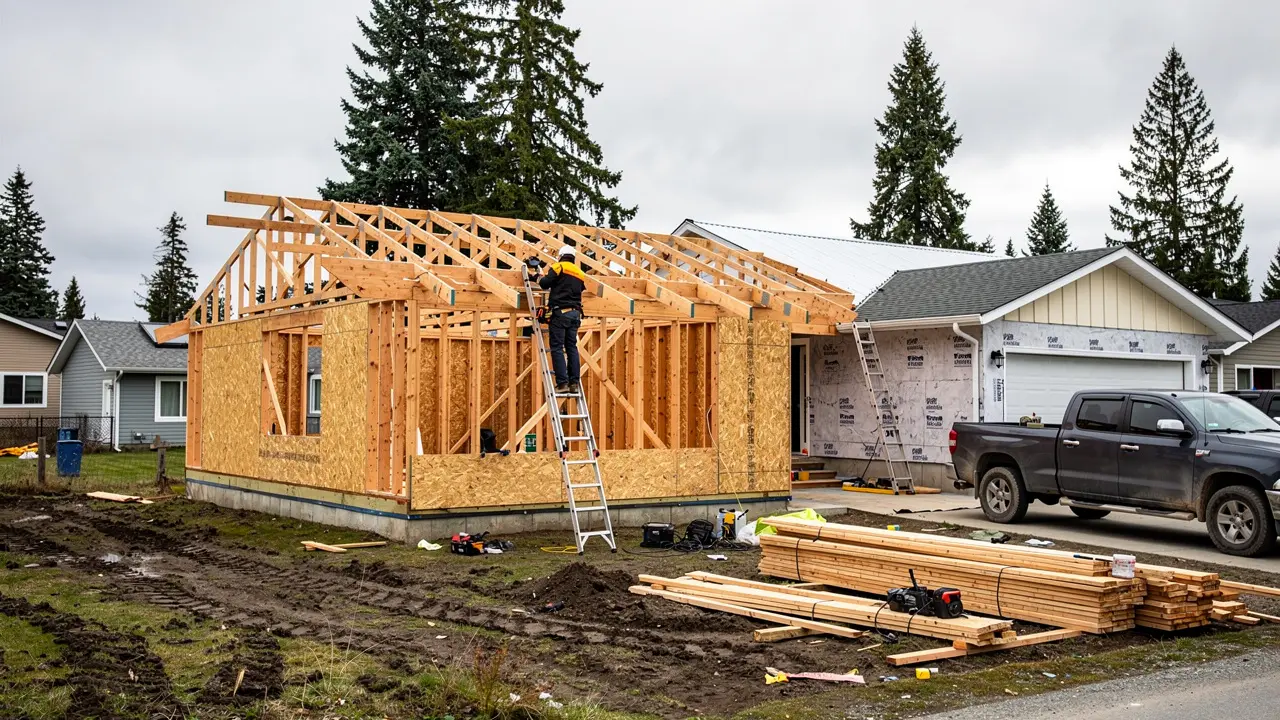
Why a Home Addition Makes Sense
If you've outgrown your home but love your property and neighbourhood, a home addition is often the smarter move over buying new. You avoid realtor fees, moving costs, and the hassle of selling in a small market. You also get to design the new space exactly the way you want it.
In the Peace Region, land is relatively affordable and lots tend to be generous. That means most properties have room to expand. Whether you need an extra bedroom, a bigger kitchen, or an attached garage addition, building onto your existing home keeps your life rooted while solving the space problem.
Types of Home Additions
The right addition depends on your lot, your budget, and what you actually need. Here are the most common types we build:
- Room additions: Extra bedrooms, family rooms, mudrooms, or home offices. These are single-storey bump-outs that extend your existing footprint.
- Garage additions: Attached garages are popular in northern BC. A heated, attached garage makes a real difference when it's -35 outside. We tie the roofline and siding into your existing home so it looks like it was always part of the house.
- Second storey additions: If your lot is tight, going up is the answer. This is more involved because we need to assess whether your existing foundation and walls can carry the extra load, but it gives you a lot of square footage without using more yard.
- Sunrooms and four-season rooms: A bright, enclosed space that connects you to the outdoors without freezing. Proper insulation and glazing are critical up here.
Foundation Options for Additions
Every addition needs a solid foundation, and your options depend on what you're building and how it connects to your existing home.
Screw pile foundations are an excellent choice for home additions. They can be installed year-round, even in frozen ground, with minimal disruption to your yard and existing landscaping. There's no large excavation, no curing time, and you can start building on them right away. For room additions and attached garages, screw piles often make more sense than pouring new concrete next to an existing foundation.
Concrete forming is the other option. A poured concrete foundation or slab works well for heated garage additions where you want an in-floor heating system, or for additions that need a full basement. The key is making sure the new foundation connects properly to the existing one, with adequate frost protection at the joint.
Home Addition Cost Per Square Foot
Home addition costs in the Peace Region vary depending on the type of addition, finishing level, and site conditions. Here are rough ranges to help you budget:
- Basic room addition: $150 to $250 per square foot. This includes foundation, framing, insulation, drywall, flooring, and basic electrical.
- Attached garage addition: $80 to $150 per square foot. Heated garages with insulation and concrete floors are at the higher end. An unheated attached garage is more economical.
- Second storey addition: $200 to $350+ per square foot. The higher cost reflects structural reinforcement, temporary roofing, and the complexity of building on top of an occupied home.
- Kitchen or bathroom addition: $250 to $400+ per square foot. Plumbing, cabinetry, countertops, and fixtures push these higher than a standard room.
These are ballpark numbers. Material costs change, and every project is different. Call us for a free estimate on your specific project.
Permits and Regulations
Home additions require building permits in most jurisdictions in the Peace Region. Within the City of Dawson Creek or the City of Fort St. John, you'll need a building permit that covers structural, electrical, plumbing, and mechanical work. The permit process includes inspections at key stages.
Properties in the Peace River Regional District follow a different process depending on the electoral area. Some areas have full building inspection, others have less oversight. If your property is in the Agricultural Land Reserve, there may be additional restrictions on how much you can add to a residential building.
As your general contractor, we handle permit applications and coordinate inspections so you don't have to chase paperwork.
Insulation for Northern BC Additions
An addition that isn't properly insulated will cost you every winter in heating bills, and you'll feel it. In the Peace Region, we build to high insulation standards because the climate demands it.
Spray foam insulation is our go-to for additions. It provides a continuous air and vapour barrier, seals every gap, and delivers higher R-values per inch than batt insulation. This is especially important at the tie-in point where the new addition meets the existing structure. That joint is a common spot for air leaks and cold spots if it isn't sealed properly.
We also make sure the vapour barrier, ventilation, and moisture management are done right. In a -40 climate, getting this wrong leads to condensation in walls, mould, and structural damage over time.
Tying New Construction Into Your Existing Home
The structural tie-in is where additions succeed or fail. A good addition looks and functions like it was part of the original home. A bad one looks bolted on and causes problems for years.
We match rooflines, siding, trim, and interior finishes so the transition is seamless. On the structural side, we ensure the new framing connects properly to your existing walls and roof, with flashing details that prevent water intrusion at every joint. This is custom home construction work, not cookie-cutter building.
Frequently Asked Questions
How long does a home addition take?
A straightforward room addition typically takes 8 to 12 weeks from start to finish. An attached garage is similar. Second storey additions take longer, usually 12 to 20 weeks depending on complexity. Permit timelines add 2 to 6 weeks on the front end.
Can I live in my home during the addition?
Yes, in most cases. Room additions and garage additions are built from the outside in, so disruption to your daily life is minimal. Second storey additions involve more disruption since we need to remove and rebuild the roof.
Do I need an engineer for a home addition?
For most additions, yes. Structural engineering is required to ensure the new foundation, framing, and connections meet building code. For second storey additions, engineering is essential to verify your existing structure can handle the extra load. We coordinate the engineering as part of our process.
What's better for an addition, screw piles or concrete?
It depends on the project. Screw piles are faster, less disruptive, and work year-round. Concrete is better when you need a full slab floor (like a heated garage) or a basement. We'll recommend the right option for your situation.
Can you match my existing siding and roofing?
We make every effort to match materials. If your existing siding or roofing is discontinued, we'll find the closest match or discuss options like re-siding the entire visible face so everything looks uniform.