Post Frame vs Stick Frame Construction
Two Ways to Build a Structure
If you are planning a shop, barn, or outbuilding in the Peace Region, two construction methods come up in almost every conversation: post frame and stick frame. Both produce solid buildings, but they work differently and suit different projects. Understanding the basics will help you make a confident decision before you start spending money.
How Post Frame Construction Works
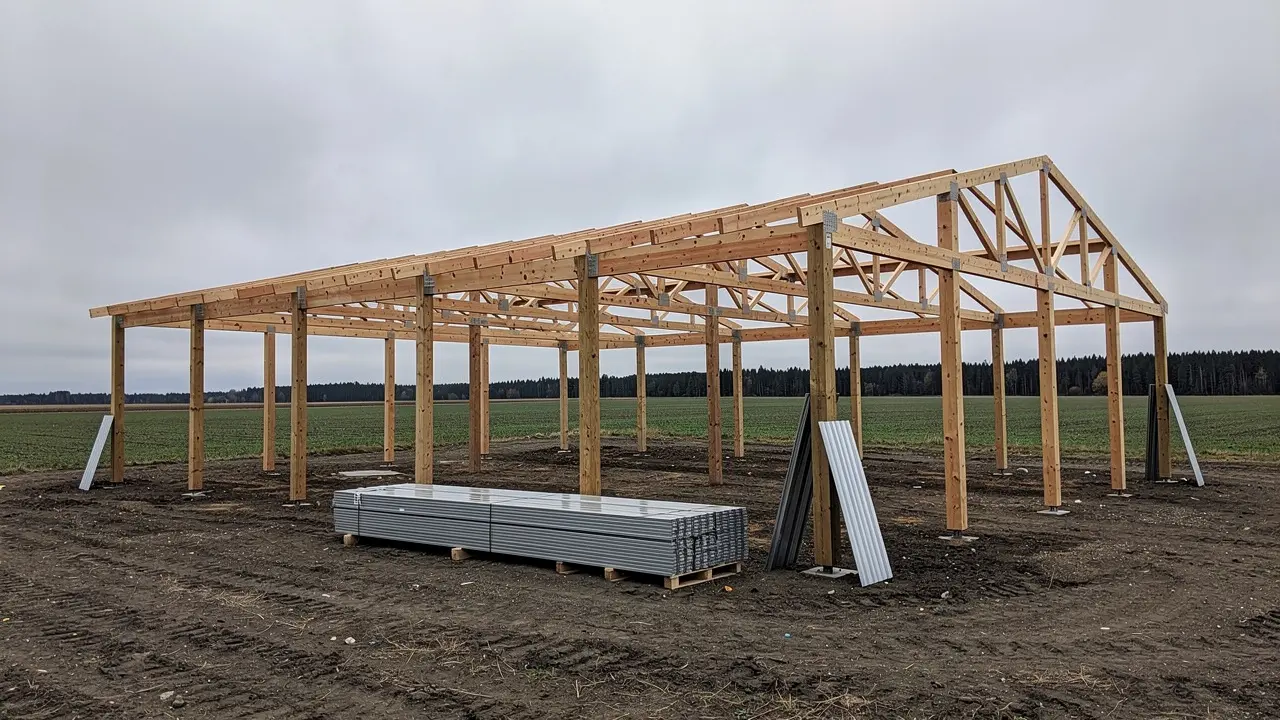
Post frame construction (sometimes called pole building or post and beam) uses large, widely spaced vertical posts as the main structural members. These posts are either embedded directly in the ground, set on concrete pads, or mounted on screw pile foundations. Horizontal girts connect the posts and support the wall cladding, while trusses span from post to post to carry the roof.
Because the posts carry all the structural load, you do not need a continuous foundation or load-bearing walls between them. That means wide open interiors with no columns in the way, which is exactly why post frame is the go-to method for shops, barns, and agricultural buildings across the Peace Region.
How Stick Frame Construction Works
Stick frame (also called conventional wood frame) is what most homes are built with. It uses 2x4 or 2x6 studs spaced every 16 or 24 inches to form the walls. These walls sit on a continuous foundation, and the framing distributes loads evenly across the entire wall system. Roof loads are carried by rafters or trusses that bear on the top plates of the walls.
Stick framing is extremely versatile. It handles complex floor plans, multiple stories, and detailed interior layouts well. If you are building a custom home or a building with lots of rooms and partition walls, stick frame is typically the better fit.
Cost Differences
Post frame construction generally costs less than stick frame, especially for larger buildings. Here is why:
- Less material: Fewer framing members are needed because posts are spaced 8 to 12 feet apart instead of every 16 inches.
- Simpler foundations: You may not need a full concrete perimeter foundation. Posts can sit on pads, in the ground, or on screw piles.
- Faster construction: Fewer pieces to cut and assemble means less labour time on site.
For a basic 30x40 cold storage shop, post frame might run $30 to $50 per square foot. The same building in stick frame could cost $50 to $70+ per square foot once you factor in the continuous foundation and additional framing. For more detail on shop costs, see our guide to building a shop in Dawson Creek.
For finished, heated buildings with drywall and full mechanical systems, the cost gap narrows. But for straightforward shops and outbuildings, post frame is usually the more economical choice.
Best Uses for Each Method
Post frame works best for:
- Farm shops and equipment storage
- Barns and livestock shelters
- Commercial workshops and warehouses
- Large garages and hobby shops
- Any building where you want wide, open interior space
Stick frame works best for:
- Custom homes and residences
- Multi-story buildings
- Buildings with complex floor plans and lots of interior walls
- Structures that need to meet residential building code requirements
There is also overlap. Timber frame construction is a related method that uses heavy timbers and traditional joinery for exposed post-and-beam aesthetics. It is popular for homes, lodges, and buildings where visible wood structure is part of the design.
Foundation Requirements
This is one of the biggest practical differences between the two methods.
Post frame does not require a continuous concrete foundation. Posts can be set directly in the ground with compacted gravel, placed on precast concrete pads, or bolted to screw piles. A concrete floor slab can be poured after the building is up, or you can use a gravel floor for cold storage. This flexibility saves time and money, especially in winter when concrete work is more difficult.
Stick frame typically requires a continuous perimeter foundation, either a poured concrete slab with thickened edges or a full frost wall with footings below the frost line. In the Peace Region, that means footings at 6 to 8 feet deep. This is a bigger investment, but it provides a solid base for heated, finished buildings.
Insulation Considerations
Both building types can be insulated effectively, but the approach differs.
Stick frame walls are straightforward to insulate. Batt insulation fits neatly between studs, and you can easily run electrical and plumbing inside the walls before closing them up.
Post frame walls have wider cavity spaces between girts. Spray foam insulation works well here because it conforms to irregular spaces and provides both insulation and an air barrier in one step. For heated post frame shops, spray foam in the walls and ceiling is the most common approach we use in the Peace Region.
If your building will be heated and you want it well insulated, either method will get you there. The insulation details just look a little different.
Why Post Frame Is Popular in the Peace Region
Post frame construction has a long history in agricultural areas, and the Peace Region is no exception. Several factors make it especially practical here:
- Large building sites: Rural properties have room for big shops and barns. Post frame handles large footprints efficiently.
- Agricultural use: Equipment storage, hay barns, and livestock shelters are everyday needs. Post frame is purpose-built for these.
- Winter-friendly: Post frame buildings can go up on screw piles in the middle of winter, with no need to wait for concrete curing weather.
- Budget-conscious: When you need a functional building without spending more than necessary, post frame delivers.
Frequently Asked Questions
Can you build a house with post frame construction?
Yes. Post frame homes are becoming more common. The exterior uses post frame methods, and interior partition walls are framed conventionally. It can be a cost-effective way to build on rural properties, though some municipalities have specific code requirements to review first.
How long does a post frame building last?
With proper construction and treated posts, a post frame building will last decades. Many pole barns built 40 or 50 years ago are still standing and in use. Modern materials and engineering have only improved longevity.
Is post frame construction strong enough for heavy snow loads?
Absolutely. Post frame buildings are engineered for local conditions, including Peace Region snow and wind loads. Trusses are sized and spaced to handle the loads required by code.
Can I add a concrete floor to a post frame building later?
Yes. Many clients build the shell first on screw piles or posts in the ground, then pour a concrete slab inside once the building is enclosed. This is a common and practical approach.
Which method is faster to build?
Post frame is generally faster. A basic post frame shop can be enclosed in a couple of weeks, while a comparable stick frame building usually takes longer due to foundation work and more framing.