Shop Size Guide: 30x40 vs 40x60 and More
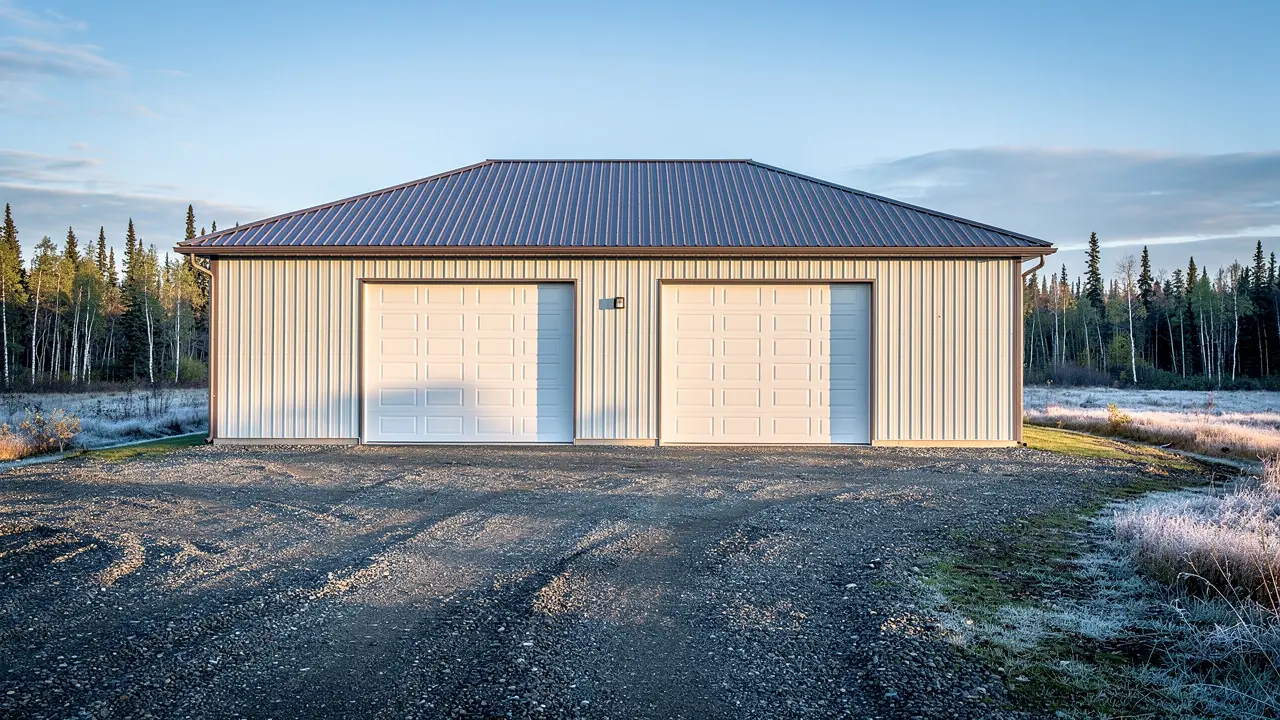
Picking the Right Shop Size
The most common question we get when someone calls about shop construction is, "What size should I build?" The answer depends on what you're storing, whether you need a heated workspace, and how much room your property allows. One thing we always tell people: build bigger than you think you need. You'll fill it.
This guide walks through the most popular shop sizes we build in the Peace Region, what each one works well for, and the practical details that affect your decision.
24x30: The Starter Shop
A 24x30 gives you 720 square feet. That's enough for a two-bay hobby garage or a small workshop. You can fit two vehicles side by side, or one vehicle plus a decent work area with a bench and tools.
Good for: Personal garage, hobby workshop, small equipment storage, a place to wrench on your truck.
Limitations: It feels tight fast. If you're thinking about storing a truck and a trailer, or setting up a serious woodworking shop, you'll wish you went bigger. There's no room to grow.
Typical square footage: 720 sq ft
30x40: The Most Popular Size
The 30x40 is probably the most common shop size we build. At 1,200 square feet, it hits a sweet spot between cost and usable space. You can park two or three vehicles, store seasonal equipment, and still have room for a workbench area.
Good for: Farm shop, heated workshop, equipment storage, small commercial use. If you run a small business out of your shop, this size handles most needs.
Layout tip: A 30x40 with a 14-foot overhead door on the short wall works great. You can drive a truck straight through or back in equipment easily. Add a man door on the side and you have a very functional space.
Typical square footage: 1,200 sq ft
40x60: The Farm and Commercial Standard
At 2,400 square feet, a 40x60 gives you serious room to work. This is the size most farmers and small business owners settle on when they need space for larger equipment, multiple vehicles, or a combination of storage and work area.
Good for: Farm equipment storage (tractors, combines, implements), commercial shop or service bay, multi-use space with a heated work area on one end and cold storage on the other.
Layout tip: With a 40-foot width, you can fit two 14-foot overhead doors on the front wall with room between them. That lets you drive equipment straight through. Many owners partition off one end as a heated workspace and leave the rest as cold storage.
Typical square footage: 2,400 sq ft
40x80: Large Equipment and Commercial
A 40x80 gives you 3,200 square feet. This is a commercial-grade building. We build these for farms running large equipment, oilfield service companies, contractors who need covered yard space, and businesses that need warehouse storage alongside a work area.
Good for: Large farm operations, commercial/industrial shop, equipment dealerships, fleet storage, multi-tenant shop bays.
Things to know: At this size, engineering becomes more involved. Roof spans, wind loads, and snow loads all require proper structural design. You may also need commercial-grade electrical and fire code considerations depending on the use. We handle this through our pre-construction design process.
Typical square footage: 3,200 sq ft
Heated Shop vs Cold Storage
This decision affects your budget more than almost anything else. A cold storage shop is straightforward: a shell to keep your equipment out of the weather. A heated shop is a different beast entirely.
Cold storage shops are the most affordable option. You're looking at metal cladding, a basic concrete slab or gravel floor, and minimal finishing. Great for storing tractors, trailers, boats, RVs, and seasonal gear. No insulation, no heating system, no vapour barrier to worry about.
Heated shops need insulation, a vapour barrier, a heating system, and usually a concrete floor with proper drainage. In northern BC, spray foam insulation is the most effective choice for shop walls and ceilings because it seals air leaks and provides a vapour barrier in one step. You'll also need to decide on a heating system: in-floor radiant, forced air, or unit heaters.
The cost difference is significant. A heated shop typically costs 40 to 60 percent more than the same building as cold storage. But if you're working in your shop through a Peace Region winter, that investment pays for itself fast.
Foundation Options by Size
Your foundation needs to match the size and use of your shop. Here's what works for each:
- 24x30 and 30x40: Screw pile foundations work well for these sizes, especially for cold storage shops or if you want to build year-round. A concrete slab is standard for heated shops. Post frame construction is the most economical approach for a basic farm or storage building.
- 40x60: Concrete slab is common for heated shops at this size. Screw piles with a floating slab are another option. Post frame works if the shop is unheated or lightly heated.
- 40x80: At this size, you almost always need an engineered foundation. Concrete footings and slab are standard. Screw piles can still work but require engineering to handle the loads.
For a deeper look at foundation choices, check out our guide on choosing the right foundation for your project.
Rough Cost Ranges
These are ballpark figures based on what we see in the Peace Region. Material costs fluctuate, and site conditions affect pricing. But this gives you a starting point for budgeting:
- 24x30 cold storage: $25,000 to $45,000
- 24x30 heated: $45,000 to $70,000
- 30x40 cold storage: $36,000 to $60,000
- 30x40 heated: $60,000 to $100,000+
- 40x60 cold storage: $60,000 to $100,000
- 40x60 heated: $100,000 to $175,000+
- 40x80 cold storage: $80,000 to $140,000
- 40x80 heated/commercial: $150,000 to $300,000+
The wide ranges reflect different finishing levels, site conditions, and material choices. The best way to get an accurate number is to call us. We'll talk through your plans and give you a realistic estimate. If you're in the Dawson Creek area, our guide on building a shop in Dawson Creek covers local costs and permits in more detail.
Frequently Asked Questions
What's the most popular shop size in the Peace Region?
The 30x40 is the most common size we build. It works for most homeowners and small farm operations. For larger equipment or commercial use, the 40x60 is the go-to choice.
Should I build bigger than I think I need?
Yes, almost always. The cost per square foot drops as you go bigger, and we've never had a customer say they wished they built smaller. If you're on the fence between two sizes, go with the larger one.
Can I start with cold storage and add heat later?
You can, but it's more expensive to retrofit than to build it heated from the start. If you think you'll want heat eventually, at minimum plan for insulation and a concrete floor during the initial build. Adding a heating system later is simpler than adding insulation after the fact.
How long does it take to build a shop?
A simple cold storage shop can go up in a few weeks. A fully finished heated shop typically takes 2 to 4 months, depending on size and complexity. Weather can affect the timeline during winter, though screw pile foundations let us start builds year-round.
Do I need a permit?
In most cases, yes. Requirements vary depending on whether you're within city limits or in the regional district. We can help you figure out what's needed for your specific property.