Spray Foam vs Blown-In Insulation in Northern BC
Why Insulation Matters in Northern BC
When you're dealing with winters that regularly hit -30°C and below, insulation isn't optional. It's the difference between a comfortable, affordable-to-heat building and one that burns through propane all winter while frost creeps up the walls. Whether you're insulating a new home, a heated shop, or upgrading an older building, picking the right insulation makes a big difference in comfort and energy costs.
The three main options we install in the Peace Region are closed-cell spray foam, open-cell spray foam, and blown-in insulation. Each has its place. Here's how they compare.
Closed-Cell Spray Foam
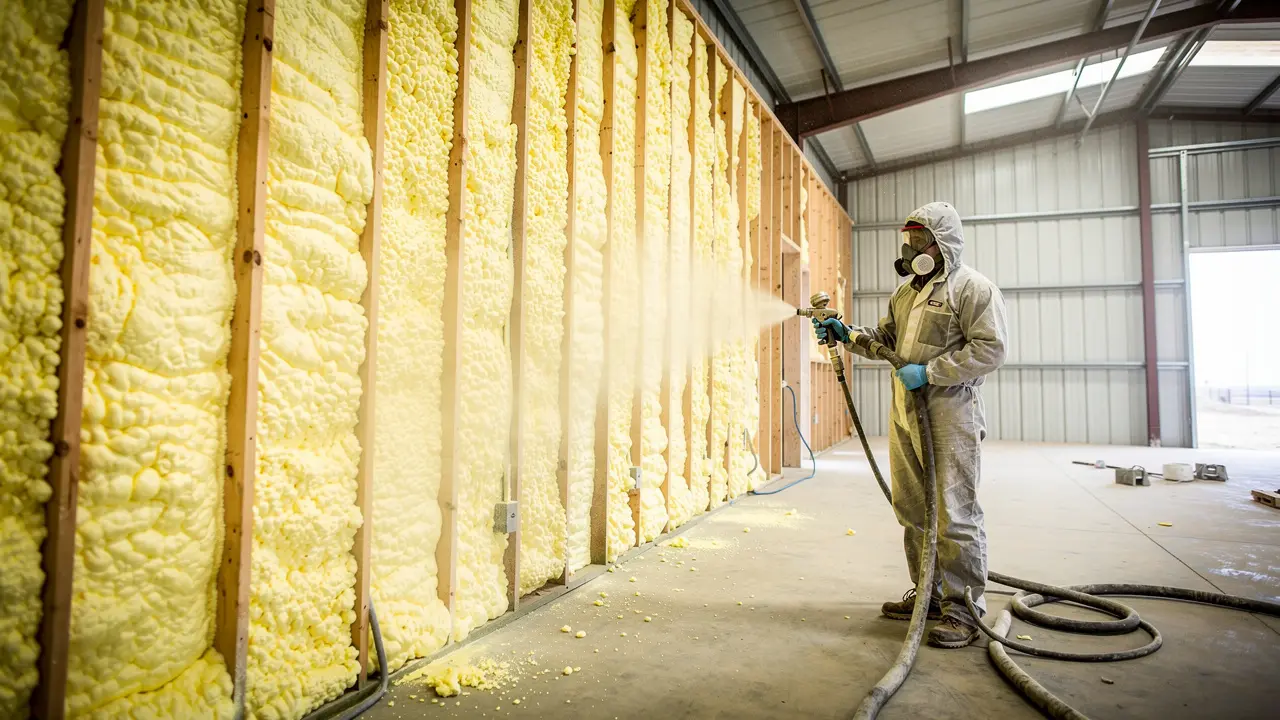
Closed-cell spray foam is the highest-performing insulation we install. It's a rigid, dense foam that expands on contact and bonds to whatever surface it's sprayed on.
R-value: About R-6 to R-7 per inch. That means a 2-inch layer in a 2x6 wall cavity gives you around R-12 to R-14 from the foam alone, and you can fill the rest of the cavity with batt insulation for even higher values.
Vapour barrier: At 2 inches thick, closed-cell spray foam acts as its own vapour barrier. In northern BC, this is a big deal. Moisture getting into wall cavities is one of the main causes of mould, rot, and insulation failure in cold climates. Closed-cell foam seals the envelope tight.
Air sealing: Spray foam fills every gap, crack, and seam. Air leakage is responsible for a large portion of heat loss in most buildings. Spray foam eliminates it.
Best for: Shop walls, crawl spaces, rim joists, metal building insulation, anywhere moisture resistance matters. It's our top recommendation for heated shops in the Peace Region.
Cost: The most expensive option upfront, but the energy savings and moisture protection often make it the best long-term value in cold climates.
Open-Cell Spray Foam
Open-cell spray foam is lighter and softer than closed-cell. It expands more during application, which makes it great for filling large cavities quickly.
R-value: About R-3.5 to R-4 per inch. Lower than closed-cell, but a full 5.5-inch fill in a 2x6 wall gives you around R-19 to R-22.
Vapour barrier: Open-cell foam is vapour-permeable. It does not act as a vapour barrier on its own. In northern BC, you'll still need a separate poly vapour barrier on the warm side of the wall.
Air sealing: Excellent. Like closed-cell, it seals air leaks effectively.
Best for: Interior walls for soundproofing, attic spaces in milder climates, and situations where you want the air sealing benefits of spray foam at a lower cost. In our climate, we usually recommend it for interior applications rather than exterior walls.
Cost: About 30 to 40 percent less than closed-cell spray foam.
Blown-In Insulation
Blown-in insulation (cellulose or fibreglass) is loose fill material that's blown into wall cavities and attics using specialized equipment.
R-value: About R-3.2 to R-3.8 per inch for cellulose, R-2.5 to R-3.5 for blown fibreglass. A full attic with 16 inches of blown cellulose gives you around R-50 to R-60.
Vapour barrier: Blown-in insulation does not provide a vapour barrier. You need a separate poly vapour barrier in the wall assembly.
Air sealing: Blown-in fills cavities well but does not seal air leaks the way spray foam does. For best performance, air seal the framing first, then blow in the insulation.
Best for: Attic top-ups, renovation projects where walls are already closed in, and budget-conscious projects where spray foam isn't practical. It's excellent for attics because you can pile it deep for very high R-values at low cost.
Cost: The most affordable option per square foot. Roughly half the cost of closed-cell spray foam in most applications.
Where to Use Each Type
Most buildings benefit from a combination of insulation types. Here's what we typically recommend:
- Shop walls: Closed-cell spray foam. The moisture protection and air sealing are worth the investment in a heated shop.
- Home exterior walls (new build): Closed-cell spray foam in the first 2 inches, then batt insulation to fill the cavity. This gives you a vapour barrier, air seal, and high R-value.
- Home exterior walls (renovation): Blown-in cellulose or fibreglass is often the practical choice when walls are already closed in. Drill-and-fill is less disruptive than tearing off drywall.
- Attics: Blown-in insulation. You can achieve R-50 or higher at a reasonable cost. It's easy to top up existing insulation too.
- Crawl spaces and rim joists: Closed-cell spray foam. These areas are prone to moisture and air leaks, and spray foam handles both.
- Metal buildings: Closed-cell spray foam directly on the metal panels. It stops condensation and insulates in one application.
Moisture and Vapour Barriers in Cold Climates
In northern BC, moisture management is just as important as R-value. Warm, moist air from inside your building wants to move outward through the walls during winter. If it hits a cold surface, it condenses. Over time, that condensation causes mould, rot, and insulation failure.
Closed-cell spray foam solves this by acting as both insulation and vapour barrier. With blown-in or open-cell spray foam, you need a properly installed 6-mil poly vapour barrier on the warm side of the wall. If the poly has gaps, tears, or poor sealing around electrical boxes and penetrations, you'll get moisture problems regardless of how much insulation is in the wall.
This is one of the main reasons we recommend closed-cell spray foam for shops. Shops tend to have more penetrations, larger door openings, and more challenging air sealing than a typical home. Spray foam handles all of it.
Cost Comparison
Here are rough cost ranges for insulation in the Peace Region. Actual pricing depends on the building, access, and scope of work:
- Closed-cell spray foam: $2.50 to $4.00 per square foot at 2 inches thick
- Open-cell spray foam: $1.50 to $2.50 per square foot for a full cavity fill
- Blown-in cellulose (attic): $1.00 to $2.00 per square foot at R-50
- Blown-in fibreglass (attic): $1.00 to $1.75 per square foot at R-50
Keep in mind that cheaper insulation can cost you more over time in higher heating bills. In a climate like ours, the payback on better insulation is faster than you might expect.
Frequently Asked Questions
Is spray foam insulation worth the extra cost?
For heated shops and new home construction in northern BC, yes. The air sealing and moisture protection pay for themselves through lower heating costs and fewer long-term problems. For attic top-ups, blown-in insulation is usually the better value.
Can I spray foam over existing insulation?
In some cases, yes. Closed-cell spray foam can be applied over existing insulation in attics or crawl spaces. In walls, it depends on the situation. We'll assess what makes sense during a site visit.
What R-value do I need in northern BC?
BC Building Code requires minimum R-20 for walls and R-40 to R-60 for ceilings in our climate zone. For shops, there's more flexibility, but we recommend at least R-20 in walls and R-30 or higher in the ceiling for a comfortable, affordable-to-heat space.
How long does spray foam last?
Closed-cell spray foam is very durable. It doesn't settle, sag, or lose R-value over time the way some other insulation types can. Properly installed, it should last the life of the building.
Can I insulate my existing shop without tearing it apart?
It depends on the building. Spray foam can be applied directly to metal panels or between exposed framing. For finished walls, blown-in insulation through small drill holes is sometimes an option. Give us a call and we can take a look at your building to recommend the best approach.