Winter Construction in the Peace Region
Can You Actually Build in Winter?
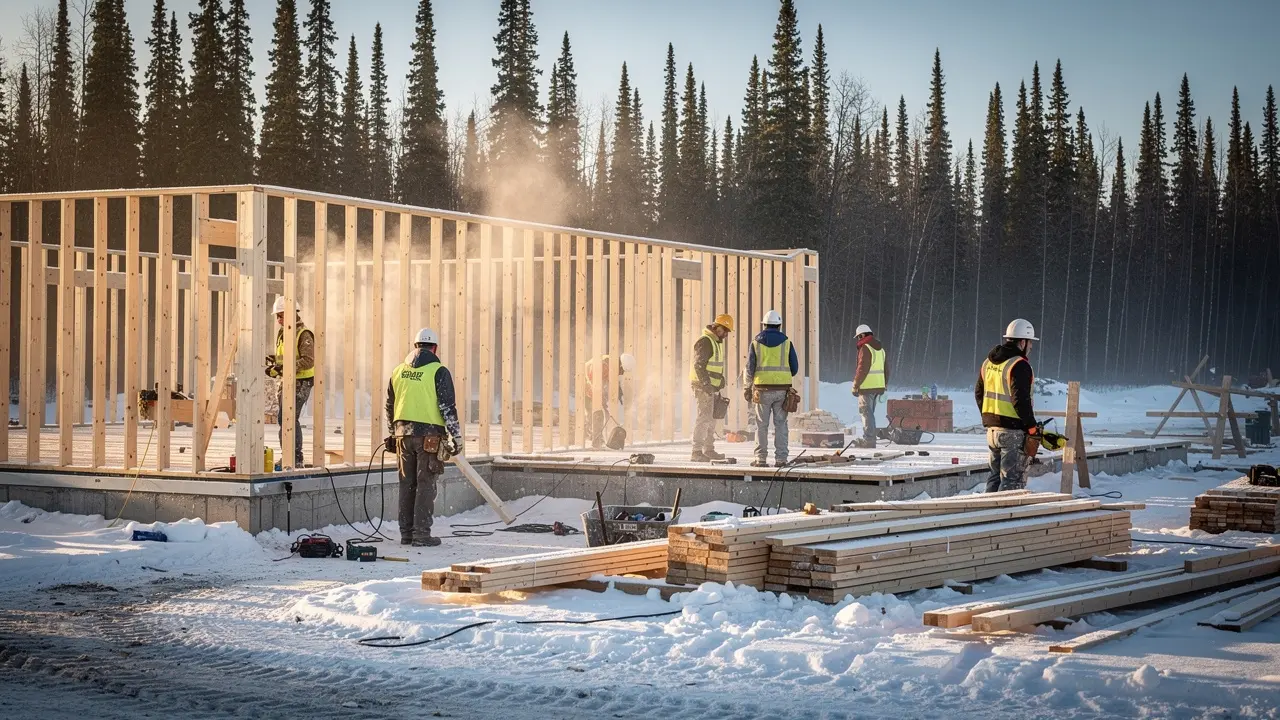
One of the most common questions we get is whether construction can happen during a Peace Region winter. The short answer is yes. Plenty of construction work can happen at -20°C, -30°C, and colder. The key is knowing which tasks work well in cold weather and which ones are better saved for warmer months.
We build year-round in Dawson Creek, Fort St. John, and across the Peace Region. Winter construction is not just possible, it can actually work in your favour if you plan it right.
What Works Well in Winter
Several major construction tasks are perfectly suited to cold weather:
- Screw Pile Installation: Screw pile foundations are one of the best reasons to build in winter. Our hydraulic equipment drives piles through frozen ground without issue. Many clients start their piles in January or February so their building is ready by spring.
- Framing: Steel and wood framing can happen in cold temperatures. Lumber actually handles well in dry winter air, and frozen ground gives equipment solid footing on site.
- Insulation: Once a building is enclosed, spray foam insulation can be applied in winter. The building shell provides a controlled environment, and temporary heating keeps conditions within the product's application range.
- Interior Work: Electrical, plumbing, drywall, and finishing are all indoor tasks. Once the shell is up and heated, interior work proceeds the same as any other time of year.
- Metal Cladding: Siding and roofing with steel panels can continue through winter, though extreme cold days (below -35°C) may slow things down slightly.
What Is Harder in Winter
Some tasks are more difficult or costly in cold weather. Not impossible, but they take extra preparation:
- Concrete Work: Pouring concrete below freezing requires heated enclosures, insulated blankets, and additives to prevent the mix from freezing before it cures. It can be done, but it adds cost. If your project needs a concrete slab, it is often better to pour it in warmer months.
- Excavation: Frozen ground is harder to dig. Site preparation like grading and trenching takes more time and heavier equipment when the ground is frozen solid.
- Concrete Foundations: Full perimeter foundations with footings and walls are best poured when temperatures stay above -10°C consistently. Winter pours are possible but more expensive.
A Smart Winter Build Strategy
The most efficient approach is to match each phase of your project to the right season. Here is a typical year-round building plan for a shop build in the Peace Region:
- Fall/Early Winter: Finalize plans, pull permits, order materials. Get the paperwork done while builders are less busy.
- Winter: Install screw piles and start framing. Take advantage of frozen ground for good equipment access.
- Late Winter/Spring: Enclose the building, insulate, and begin interior finishing. Pour concrete floors once temperatures rise.
- Spring/Summer: Complete finishing work, landscaping, and any remaining site work.
This approach means your building is usable months earlier than if you waited for spring to start. For a detailed look at how shops come together, see our guide to building a shop in Dawson Creek.
Advantages of Starting in Winter
Building in winter is not just about managing cold weather. There are real benefits:
- Shorter Wait Times: Most people wait until spring to start their projects. That means spring and summer get booked up fast. Starting in winter often means quicker scheduling and less waiting for crews.
- Ready for Spring: If you start your foundation and framing in winter, you can be moving into your shop or home by spring instead of just breaking ground.
- Frozen Ground Access: Wet, soft sites that are difficult to access in spring and summer become firm and easy to work on when frozen.
- Material Availability: Lumber and steel are often easier to source in the off-season when demand is lower.
How KB Handles Winter Builds
We are set up for year-round construction. Our crews work through Peace Region winters every year, and our equipment is built for it. Here is what we do differently in cold weather:
- We schedule concrete pours for warmer windows and use heated enclosures when needed.
- We use temporary heating in enclosed structures to keep spray foam and other materials within their application temperatures.
- We plan material deliveries around weather forecasts to avoid delays.
- We sequence work so cold-sensitive tasks happen at the right time.
We do not just push through winter and hope for the best. We plan around it.
Frequently Asked Questions
Can you install screw piles in frozen ground?
Yes. Our hydraulic equipment drives screw piles through frozen ground without issue. Winter is actually one of our busiest seasons for pile installation because clients want their foundations in place before spring building season.
Is winter construction more expensive?
Some tasks cost more in winter, like concrete work that needs heated enclosures. But overall project costs are often similar because you avoid the rush of spring scheduling. Starting earlier can also save you months of waiting.
What temperatures are too cold to build in?
There is no hard cutoff, but we generally slow down on exterior work below -35°C for crew safety. Foundation work, framing, and enclosed interior work can continue through most winter conditions.
Should I wait until spring to start my project?
Not necessarily. If your project uses screw pile foundations, you can get your foundation and framing done over winter and be finishing by spring. Call us to talk through your timeline and we will help you figure out the best approach.
Ready to Plan a Winter Build?
If you are thinking about choosing a foundation and getting your project started this winter, give us a call. We will walk through your plans, look at your site, and help you figure out what makes sense for your timeline and budget. No pressure, just honest advice from a local builder.